〜ところです、 〜ばかり、 〜はずです。
Grammar
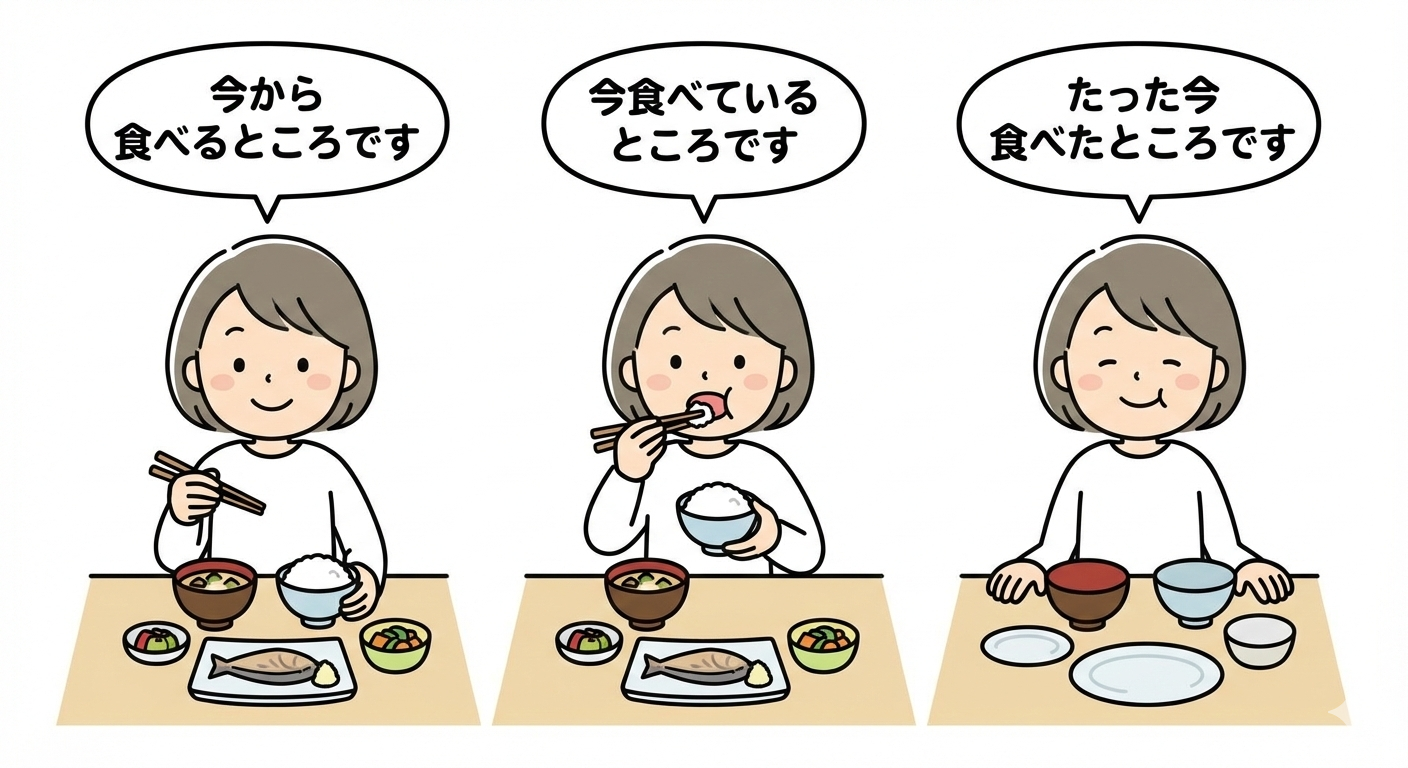
1. V(辞書形)ところです
- Meaning: Be about to do ~
- Usage: Indicates (temporal position) that an action is about to begin.
- Example:
- 今から昼ごはんを食べるところです。
I’m about to eat lunch now. - これから出かけるところです。
I’m just about to go out.
- 今から昼ごはんを食べるところです。
2. V(て形)いるところです
- Meaning: Be in the middle of doing ~
- Usage: Indicates that an action is currently in progress.
- Example:
- 今レポートを書いているところです。
I’m in the middle of writing a report. - 今資料を調べているところです。
I’m in the middle of checking the documents.
- 今レポートを書いているところです。
3. V(た形)ところです
- Meaning: Have just done ~
- Usage: Indicates that an action has just been completed.
- Example:
- たった今うちへ帰ったところです。
I’ve just come home. - ちょうど今電話が終わったところです。
The phone call has just ended now.
- たった今うちへ帰ったところです。
4. V(た形)ばかりです
- Meaning: Have just done ~ (recently)
- Usage: Indicates that not much time has passed since an action was completed. Unlike ~たところです, this can refer to a slightly longer time frame (days or weeks).
- Example:
- 先週日本へ来たばかりです。
I just came to Japan last week. - このカメラは買ったばかりなのに、もう壊れてしまいました。
Even though I just bought this camera, it’s already broken.
- 先週日本へ来たばかりです。
5. ~はずです
- Meaning: Should ~, be supposed to ~, be expected to ~
- Usage: Expresses the speaker’s expectation or assumption based on logical reasoning or evidence.
- Formation:
- V(普通形)+ はずです
- い-adj(普通形)+ はずです
- な-adj + な + はずです
- N + の + はずです
- Example:
- 彼はもう来るはずです。
He should be coming soon. - あの店は安いはずです。
That store should be cheap. - 彼女は元気なはずです。
She should be well. - 今日は休みのはずです。
Today should be a holiday.
- 彼はもう来るはずです。
6. ~はずがありません
- Meaning: There’s no way that ~, cannot possibly ~
- Usage: Strong denial of a possibility.
- Example:
- 彼がそんなことを言うはずがありません。
There’s no way he would say such a thing. - あの人が嘘をつくはずがない。
That person couldn’t possibly tell a lie.
- 彼がそんなことを言うはずがありません。
Vocabulary
| Kanji/Kana | Reading | Meaning |
|---|---|---|
| 焼きます | やきます | bake, grill, roast |
| 渡します | わたします | hand over |
| 帰って来ます | かえってきます | come back |
| 出ます | でます | leave, depart |
| バスが出ます | バスがでます | a bus leaves, departs |
| 留守 | るす | absence |
| 宅配便 | たくはいびん | delivery service |
| 原因 | げんいん | cause |
| 注射 | ちゅうしゃ | injection |
| 食欲 | しょくよく | appetite |
| パンフレット | パンフレット | pamphlet |
| ステレオ | ステレオ | stereo |
| こちら | こちら | my place, my side |
| ~の所 | ~のところ | the place around ~ |
| ちょうど | ちょうど | just, exactly |
| たった今 | たったいま | just now (used with the past tense; indicates completion) |
| 今いいでしょうか | いまいいでしょうか | May I bother you now? |
| ガスサービスセンター | ガスサービスセンター | gas service center |
| ガスレンジ | ガスレンジ | gas range, gas cooker |
| 具合 | ぐあい | condition |
| どちら様でしょうか | どちらさまでしょうか | Who is this, please? |
| 向かいます | むかいます | head for |
| お待たせしました | おまたせしました | Sorry to have kept you waiting |
| 知識 | ちしき | knowledge |
| 宝庫 | ほうこ | treasury |
| 手に入ります | てにはいります | come in, reach |
| 情報が手に入ります | じょうほうがてにはいります | information comes in |
| システム | システム | system |
| 例えば | たとえば | for example |
| キーワード | キーワード | key word |
| 一部分 | いちぶぶん | one part |
| 入力します | にゅうりょくします | input |
| 秒 | びょう | second |
| 出ます | でます | be published |
| 本が出ます | ほんがでます | a book is published |